
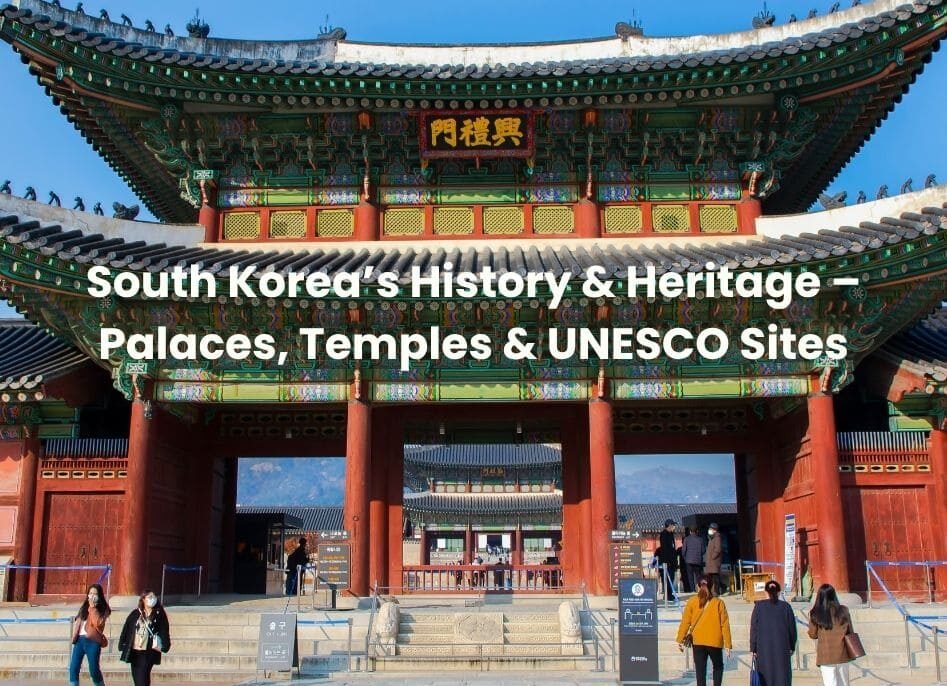
South Korea’s History & Heritage – Palaces, Temples & UNESCO Site
A Trip to South Korea is an exploration of country with ancient traditions and modern innovation. South Korea boasts a history of thousands of years, from regal royal palaces in Seoul to tranquil Buddhist temples tucked away in mountains & UNESCO-listed heritage sites. For travelers, historians & culture lovers, discovering Korea’s heritage is like walking into a living museum—one that tells the story of kingdoms, spirituality & artistic brilliance.
In this guide by Fly For Holidays, we will look at South Korea history, Korean palaces, Buddhist temples in Korea and UNESCO World Heritage Sites, such as “South Korea heritage sites”, “Korean royal palaces”, “UNESCO sites in Korea”, & “historic places in South Korea”.
A Glimpse into South Korea’s Rich History
South Korea’s cultural legacy is connected to the ancient kingdoms of Goguryeo, Baekje, & Silla that prospered from 57 BCE to 668 CE. Much of what we see today in terms of architecture, culture & Confucian traditions were heavily influenced by the Joseon Dynasty (1392–1897).
Gyeongju, often called “the museum without walls,” reflects the brilliance of the Silla Dynasty, showcasing temples, tombs, & palaces that date back over a millennium.
Korea’s historical journey includes:
- Ancient kingdoms and Buddhist influence
- Confucian royal governance in the Joseon era
- Cultural preservation through UNESCO recognition
The best way to experience this layered history is through its palaces, temples & heritage sites
Read Also: “Technology & Innovation in South Korea – The World’s Smartest Nation”
Royal Palaces of South Korea
The Grandeur of Joseon Dynasty Architecture
South Korea’s royal palaces are some of the most iconic cultural landmarks in Asia, particularly in Seoul. Constructed during the Joseon Dynasty, these palaces embody the Confucian principles of harmony, hierarchy and South Korean Nature.
- Gyeongbokgung Palace
- The largest and most famous palace in Seoul
- Built in 1395 as the main royal residence
- Features grand gates, throne halls, and traditional gardens
2. Changdeokgung Palace (UNESCO Site)
- Known for its Secret Garden (Huwon)
- Designed to blend seamlessly with nature
- Recognized as a UNESCO World Heritage Site in 1997
3. Deoksugung Palace
- Unique mix of Korean and Western architecture
- Famous for the royal guard changing ceremony
Why Korean Palaces Matter
Korean palaces are not just architectural wonders, they are:
- Royal governance systems
- Confucian philosophy
- Artistic and landscape design innovation
Read Also: “10 Must-Visit Destinations in South Korea for Every Traveler”
Buddhist Temples in South Korea
Spiritual Heritage & Sacred Architecture
Buddhism has been a major part of Korean culture for centuries, & the temples of the country are spiritual & artistic masterpieces.
1. Bulguksa Temple (UNESCO Site)
Built during the Silla Dynasty
Represents the “Buddhist paradise on Earth”
Known for intricate stone pagodas and bridges
2. Seokguram Grotto (UNESCO Site)
Houses a stunning Buddha statue overlooking the sea
A masterpiece of Buddhist art and engineering
3. Haeinsa Temple (UNESCO Site)
It is the home of the Tripitaka Koreana, Buddhist scriptures carved onto wood blocks.
Demonstrates advanced preservation techniques
Temple Stay Experience
One of the most popular travel trends in South Korea is the Temple Stay Program, visitors can:
Meditate with monks
Experience traditional tea ceremonies
Learn Buddhist practices
Read Also: “South Korea for First-Time Travelers – Visa, Budget & Travel Tips”
UNESCO World Heritage Sites in South Korea
South Korea (Republic of Korea) is home to a number of UNESCO World Heritage Sites showcasing its rich culture & historical accomplishments.
Major UNESCO Sites You Must Know
1. Gyeongju Historic Areas
Contains temples, pagodas, tombs, and palace ruins
Represents the golden age of the Silla Kingdom
2. Baekje Historic Areas
Archaeological remains from the Baekje Kingdom
Show cultural exchange with China and Japan
3. Hwaseong Fortress
18th-century fortress with advanced military design
Blends Eastern and Western architecture
4. Jongmyo Shrine
Confucian royal shrine for ancestral rituals
One of the oldest preserved shrines in Asia
5. Hahoe & Yangdong Folk Villages
Traditional Korean villages
Showcase Confucian culture and rural life
6. Jeju Volcanic Island & Lava Tubes
South Korea’s only natural UNESCO site
Known for unique geological formations
7. Royal Tombs of the Joseon Dynasty
Spread across multiple locations
Reflect royal burial traditions
UNESCO Significance
South Korea has many cultural and natural heritage sites that are world famous, including:
Architectural brilliance
Religious traditions
Historical continuity across centuries
Read Also: “Luxury & Wellness in South Korea – Spas, Hot Springs & Premium Experiences”
Cultural Heritage Beyond Monuments
South Korea’s historical sites give a look into the country’s past:
1. Intangible Cultural Heritage
Traditional music (Gugak)
Royal court rituals
Festivals and folk traditions
2. Historical Documents
Ancient texts written in Hanja reveal Korea’s past, governance, & philosophy.
3. Traditional Lifestyle
Hanok (traditional houses)
Korean cuisine rooted in history
Confucian values in daily life
Read Also: “K-Pop & South Korean Entertainment: How Music and Drama Took Over the World”
Why South Korea’s Heritage is a Must-Experience
Exploring South Korea’s historical sites offers:
- A deep understanding of East Asian history
- Unique architectural styles
- Spiritual and cultural enrichment
Every step, be it walking through palace courtyards, meditating in temples or exploring UNESCO sites, connects you to Korea’s timeless legacy.
Read Also: “South Korean Cuisine – Street Food, K-BBQ & Traditional Dishes You Must Try”
Travel Tips for Exploring Korean Heritage
- Best Time to Visit: South Korean Cherry Blossom season (Spring) & Fall Foliage (Autumn)
- Dress Code: Modest attire for temples
- Guided Tours: Recommended for deeper insights
- Transport: Efficient public transport connects major sites
- Keep your South Korea Visa ready—so you don’t miss the incredible historical experience!
Conclusion
South Korea’s history & heritage is a beautiful blend of royal grace, spiritual depth & cultural richness. From the splendour of palaces to the serenity of temples & the international acclaim of UNESCO sites, the country offers an unforgettable journey through time.
South Korea is more than a destination, it’s a story waiting to be explored for travelers & history lovers alike.
South Korea’s History & Heritage – Palaces, Temples & UNESCO Sites Faq's
Why is South Korea famous for cultural tourism?
There are many well-preserved historical places in South Korea such as UNESCO sites, temples, and palaces. Because of this mixture of cultures, travelers can experience South Korea throughout history and also on modern travel.
What are the most famous historical places in South Korea?
Gyeongbokgung Palace, Changdeokgung Palace, Bulguksa Temple, and the Historic Areas of Gyeongju are just examples of some of the most famous historical places in South Korea.
What is the best time to visit historical sites in South Korea?
The best time to travel to South Korea is in the spring to fall from March to May and September to November for the best weather and view.
What is unique about Korean palace architecture?
Korean palaces were built to create harmony between nature and the buildings based on Confucian values and traditional views.
Are South Korea’s heritage sites suitable for family travel?
Yes, many of the historical sites are kid-friendly and provide guided tours, cultural activities, and large open spaces.
What is the most visited UNESCO site in South Korea?
Changdeokgung Palace is one of the most visited UNESCO World Heritage sites due to its easily accessible and beautiful gardens.
Which South Korean city has the most historical attractions?
Seoul and Gyeongju are the best places to visit if you want to see and enjoy historical attractions.
What is a temple stay in South Korea?
A temple stay is a cultural program where you stay in a Buddhist temple, learn about meditation and experience monastic life. For example, you might experience a temple stay at Haeinsa Temple.
Can tourists participate in cultural experiences at heritage sites?
Yes, there are many locations where you can rent a hanbok (Korean traditional dress), take a guided tour, and take part in cultural activities.
How can I travel between heritage sites in South Korea?
The most convenient way to travel between Seoul and Gyeongju is by KTX high-speed train, bus, and/or metro.