
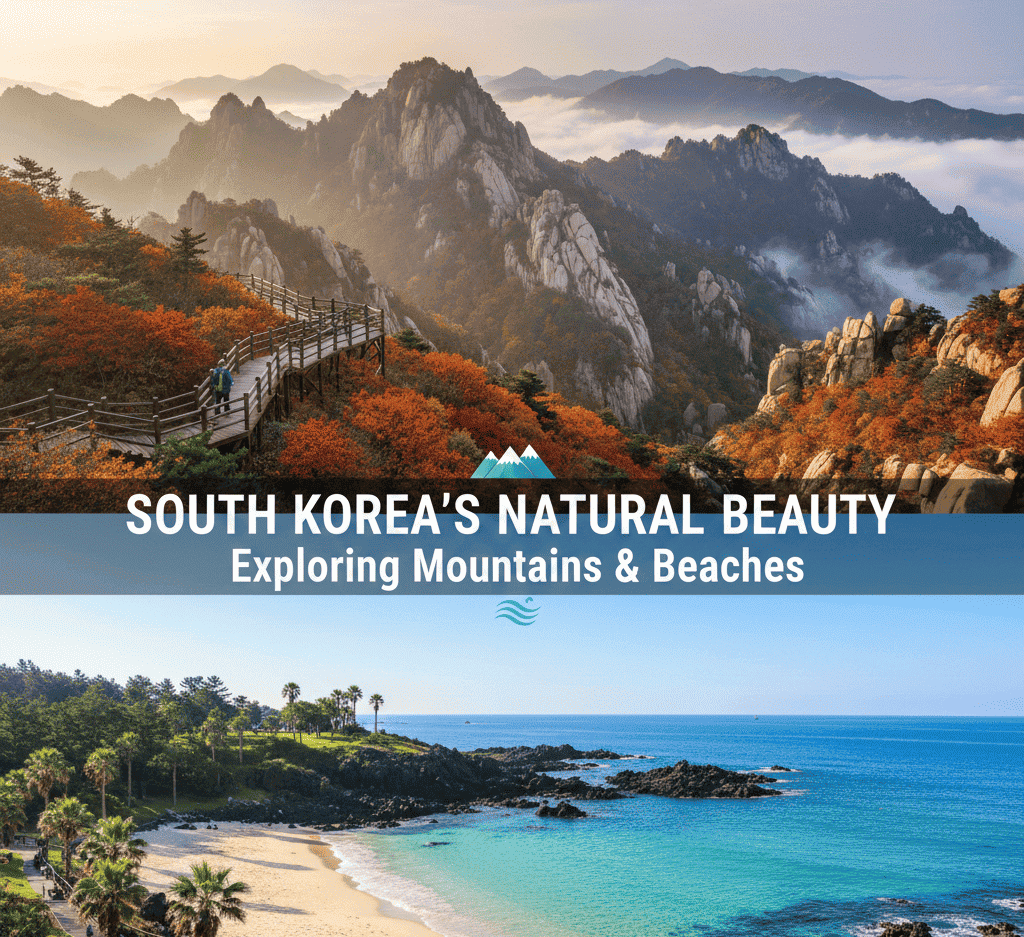
South Korea’s Natural Beauty: Exploring Mountains & Beaches
South Korea is frequently praised for its advanced technology, K-pop culture, and energetic cities like Busan and Seoul. Beyond the busy streets and neon lights, however, is an amazing natural setting just waiting to be discovered. Fly For Holidays recommend tourist to explore one of Asia’s best-kept secrets is South Korea’s natural beauty, which includes magnificent mountain ranges, immaculate beaches, lush national parks, and picturesque islands.
South Korea Tour Packages offers a variety of landscapes to experience all year round, whether you are an adventure seeker, photographer, nature lover, or leisure traveler. We examine South Korea’s mountains, beaches, and national parks in this blog to show why the nation is quickly rising to the top of the eco-tourism and nature travel rankings.
Why South Korea Is a Paradise for Nature Lovers
South Korea has more than 20 national parks, thousands of kilometers of coastline, and more than 70% mountainous terrain. Every trip is different because of its four distinct seasons: South Korea’s Spring Cherry Blossoms, summer foliage, autumn foliage, and winter snow-covered peaks.
Read Also: “How to Plan a Trip to South Korea: The Ultimate Travel Guide”
How to book a South Korea tourist visa from Mumbai?
Applying for a South Korean Tourist Visa from Mumbai is quick and hassle-free with Fly For Holidays. Our experts handle documentation, application submission, appointment coordination, and interview preparation as per the latest embassy guidelines. Contact us today to to ensure a smooth and error-free process. and travel to South Korea with confidence.
Majestic Mountains in South Korea
The foundation of South Korea’s geography and cultural identity is its mountains. Trekking, hiking, and visiting temples in mountainous areas are all integral parts of South Korean Culture.
1. Seoraksan Mountain – The Jewel of South Korea
One of South Korea’s most famous natural landmarks is Seoraksan Mountain, which is situated in Seoraksan National Park. It is a UNESCO-designated biosphere reserve known for its untamed granite peaks, thick forests, and glistening streams.
Why Visit Seoraksan Mountain:
- Stunning autumn foliage
- Cable car rides with panoramic views
- Ancient Buddhist temples like Sinheungsa
- Popular hiking trails for all fitness levels
- Hallasan Mountain – South Korea’s Highest Peak
At 1,947 meters, Hallasan Mountain is the highest peak in South Korea and is situated on Jeju Island. Volcanic landscapes and distinctive ecosystems surround this dormant volcano.
Highlights of Hallasan Mountain:
- UNESCO World Heritage Site
- Crater lake at the summit (Baengnokdam)
- Seasonal flora and fauna
- One of the best hiking destinations in South Korea
- Bukhansan Mountain – Nature Near Seoul
Bukhansan National Park, located just outside of Seoul, provides a brief getaway from the city. It is one of South Korea’s most popular national parks because of its granite peaks and wooded trails.
Ideal For:
- Day hikes from Seoul
- Rock climbing
- City skyline views mixed with nature
Read Also: “Top 15 Places to Visit in South Korea for Every Traveler”
Stunning Beaches in South Korea
Stretching along the East, Yellow, and South Seas, South Korea’s coastline offers both peaceful coastal retreats and bustling city beaches.
1. Haeundae Beach – South Korea’s Most Famous Beach
The most well-known and frequently photographed beach in South Korea is Haeundae Beach, which is situated in Busan. It blends the charm of the coast with the energy of the city.
Why Haeundae Beach Is a Must-Visit:
- Clean sandy shoreline
- Beach festivals and South Korean Nightlife
- Luxury hotels and seafood restaurants
- Ideal for first-time visitors to South Korea
2. Gyeongpo Beach – Calm and Scenic
Gyeongpo Beach, which is close to Gangneung, is well-known for its serene surroundings and sunrise views.
Best Experiences at Gyeongpo Beach:
- Romantic seaside walks
- Fresh seafood markets & South Korean Cuisine
- Nearby Gyeongpo Lake and pine forests
3. Jeju Island Beaches – Volcanic Beauty
Some of the best beaches in South Korea can be found on Jeju Island, which is renowned for its turquoise waters and volcanic black sand.
Top Jeju Beaches:
- Hyeopjae Beach
- Jungmun Saekdal Beach
- Hamdeok Beach
The beaches of Jeju are perfect for relaxing, swimming, and snorkeling.
Read Also: “South Korea Trip Cost from India”
National Parks in South Korea: A Green Wonderland
The rich biodiversity and natural heritage of South Korea are safeguarded by its national parks. Every Park has a different topography, ranging from wetlands and coastlines to mountains and valleys.
1. Seoraksan National Park
Hikers and photographers will love Seoraksan National Park, one of South Korea’s most well-known national parks.
Key Attractions:
- Ulsanbawi Rock
- Biryong Falls
- Gwongeumseong Fortress ruins
2. Jirisan National Park – The Largest National Park
Jirisan National Park, which is spread across several provinces, is home to rare wildlife and some of the oldest temples in South Korea.
Why Visit Jirisan National Park:
- Long-distance hiking trails
- Dense forests and river valleys
- Spiritual temple stays
- Dadohaehaesang National Park – Coastal Wonders
With more than 1,700 islands, this marine national park is the biggest in South Korea.
Highlights:
- Island hopping experiences
- Dramatic sea cliffs
- Unique coastal ecosystems
- Bukhansan National Park
Bukhansan, one of the easiest-to-reach national parks close to Seoul, has a variety of natural and cultural attractions.
Read Also: “K-Pop & South Korean Entertainment: How Music and Drama Took Over the World”
Seasonal Beauty of South Korea’s Nature
Experiencing nature in all four seasons is one of the main benefits of visiting South Korea.
Spring (March–May)
- Cherry blossoms
- Mild weather
- Perfect for hiking and sightseeing
Summer (June–August)
- Lush green mountains
- Beach vacations in Busan and Jeju
- Ideal for waterfalls and island tours
Autumn (September–November)
- Fall foliage in national parks
- Best season for photography
- Comfortable temperatures
Winter (December–February)
- Snow-covered mountains
- Winter hiking
- Scenic landscapes in Gangwon Province
Read Also: “Applying Visa for South Korea from India in 2025”
Eco-Tourism and Nature Travel in South Korea
Eco-friendly travel and sustainable tourism are becoming more and more important in South Korea. Many national parks encourage eco-friendly hiking, responsible tourism, and awareness of environm ental issues.
Popular eco-tourism activities include:
- Forest bathing (Shinrin-yoku)
- Temple stays in mountain monasteries
- Guided nature walks
- Bird-watching tours
Best Time to Visit South Korea for Nature Lovers
The best time to visit South Korea for natural beauty is:
- April to June for flowers and greenery
- September to November for autumn colors
These seasons offer the best balance of weather, scenery, and outdoor activities.
Read Also: “Best Time to Visit South Korea”
Travel Tips for Exploring South Korea’s Natural Attractions
- Wear comfortable hiking shoes
- Respect local rules in national parks
- Carry reusable water bottles
- Use public transport—South Korea’s system is tourist-friendly
- Book national park visits early during peak seasons
Best South Korea Tourist Visa Agent in Mumbai
Fly For Holidays is one of the leading South Korea Tourist Visa Agents in Mumbai, offering reliable and professional visa assistance. Our expert team manages documentation, application filing, and appointment support while strictly following the latest embassy guidelines. With personalized service and clear guidance, we ensure a smooth and stress-free visa process—so you can travel to South Korea with complete confidence.
Tip: Keep your South Korea Visa ready, and experience the country’s breathtaking natural beauty and serene landscapes.
Why South Korea Should Be on Your Travel Bucket List
The natural beauty of South Korea is varied, available, and irrevocable. Whether you are looking for a honeymoon, adventure tour, family tour, or solo tour, South Korea tourism provides you with scenic landscapes, rich culture, and world-class infrastructure in one place.
Conclusion
South Korea is much more than its urban landscape and pop culture. The mountains, beaches, and national parks of South Korea showcase a tranquil and picturesque side of the country that fascinates tourists throughout the year. For those who want to experience adventure, relaxation, and nature together, South Korea is one of the best nature spots in Asia.
If you want to experience the natural beauty of South Korea, this is the best time to include it in your travel itinerary.
South Korea’s Natural Beauty: Exploring Mountains & Beaches Faq's
What are the top 3 mountains in Korea?
Reach the summit of South Korea’s three principal mountains: Hallasan, Jirisan, and Seoraksan. Every peak serves as the focal point of the national park that bears its name.
Is South Korea known for its natural beauty?
From breathtaking mountain ranges to stunning beaches, South Korea has some of Asia’s most varied natural beauty. For hikers and nature lovers, Seoraksan National Park is a must-visit because of its rugged peaks, vivid fall foliage, and hidden temples.
What is the best time for hiking in the mountains in South Korea?
The best months to hike are June, July, and August; however, outside of the mountains, the weather is hot and muggy. We wouldn’t advise traveling in December, January, or February due to South Korea’s extremely cold winters.
What is the largest national park in South Korea?
The largest national park in South Korea was named Dadohaehaesang National Park in 1981.
What is the most beautiful beach in Korea?
The most famous beach in Korea is Haeundae. Luxurious hotels and skyscrapers dot the long, sandy beach. It’s nice and soothing to take a walk along the waterfront.
Is Jeju Island a natural wonder?
Absolutely, a UNESCO World Heritage Site, Jeju Island is renowned for its breathtaking beaches, waterfalls, lava tubes, and volcanic mountains.
Is South Korea good for eco-tourism?
Indeed, conservation programs, forest therapy, temple stays, and sustainable travel initiatives are some of the ways that South Korea encourages ecotourism.
Are there family-friendly nature destinations in South Korea?
Indeed, a lot of South Korea’s national parks, beaches, and nature trails are perfect for kids and family vacations.
What is the most scenic part of South Korea?
Off the Korean Peninsula, Jeju Island is renowned for its beaches, picturesque scenery, and laid-back vibe. Consider it the Hawaiian equivalent of South Korea.
What to pack when travelling to South Korea?
Comfortable walking shoes, clothes appropriate for the weather, sunscreen, reusable water bottles, and light rain gear are necessities.

Hello! I’m Prasad Gurav (PSD), and welcome to my little corner of the internet where stories, journeys, and experiences come alive. My love for travel isn’t just about ticking places off a list—it’s about discovering the world, meeting people, and sharing stories that inspire others to explore beyond their comfort zones.